
In Ashley’s words
Families Deserve to Discover What’s Possible Before They Need to Decide
Ashley Montroy on giving families time to explore meaningful choices before they need to decide.
By Ashley Montroy ·
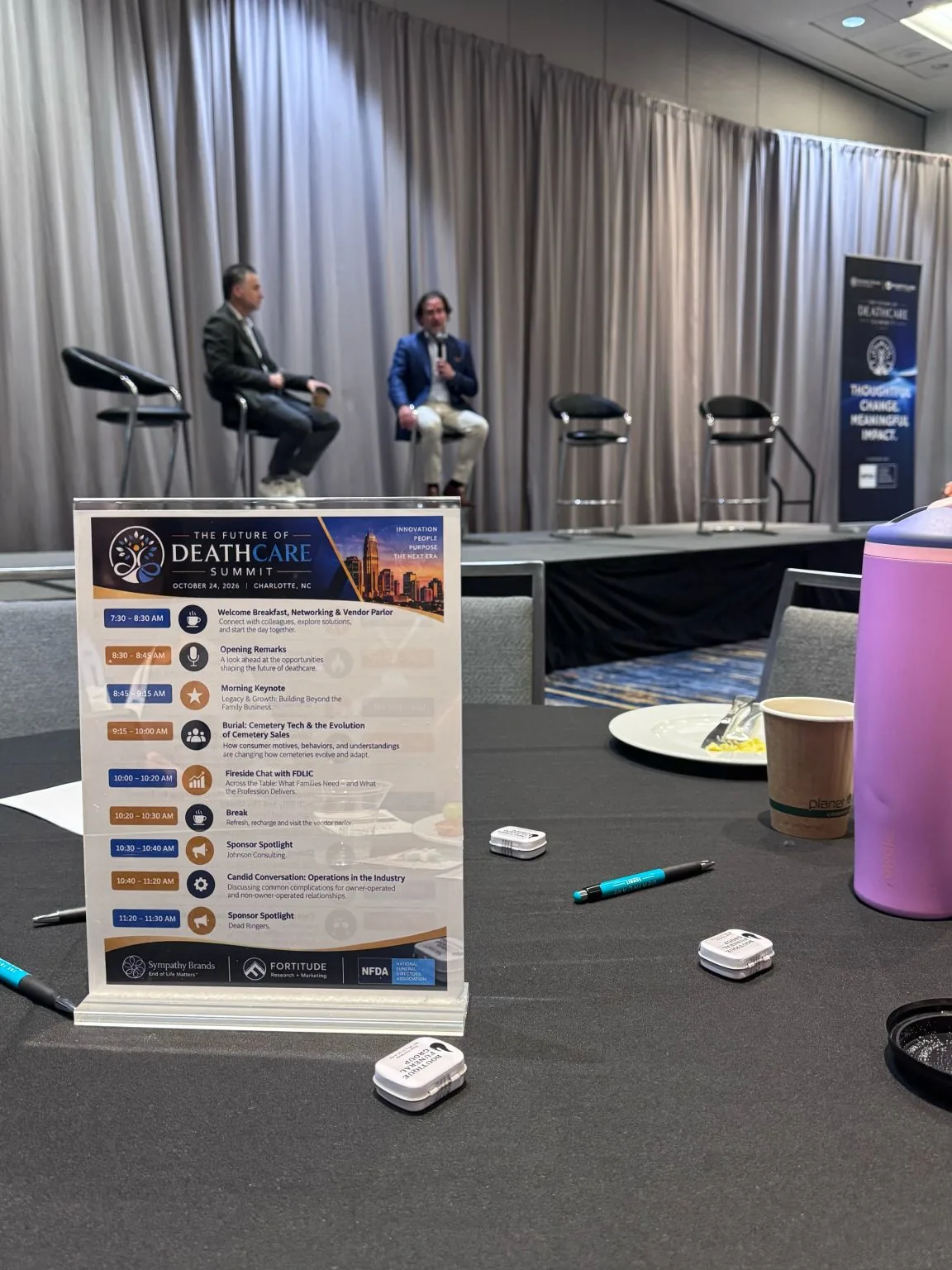
At The Future of Deathcare Summit, a speaker’s observation about what people value stayed with me. It brought me back to a question I’ve been thinking about a lot: how can families understand the possibilities within funeral service if they have never had the chance to see them?
For many people, their picture of our profession comes from the media or the marketing they have encountered. They may know the familiar images of a casket or an urn. They may have little sense of the choices available to them, or of the people who can help them explore those choices.
I want us to give them a fuller picture, much earlier.
Give families time to explore
A hospital bedside is a difficult place to begin discovering what someone wants. So is an arrangement room after a death, when a family is grieving and trying to take in a great deal of information. Those moments ask a lot of people.
What could change if some of the discovery happened beforehand?
Families could have time to talk about what feels meaningful to them. They could ask questions, share preferences and learn that there may be possibilities they had never considered. The conversation with their local funeral home could begin with a little more understanding.
Help more people see the possibilities
This is one of the reasons I’m helping build The Memorial Collective™.
I’ve spent 15 years working in technology and marketing within funeral service. I know the reach those tools can offer. I want to use that experience to help more people discover what this profession makes possible, spark conversations on a wider scale and connect that interest with local funeral homes.
Funeral professionals already carry the responsibility of caring for families. Helping the public understand their work is something we can approach together.
The question I keep returning to is simple: what would families ask for if they knew more of what was possible?
I’d love to hear how you see it. What do you wish families understood before they first walked through your door?